1
Adapters & couplers
Rode Wireless GO II receiver cold shoe cradle
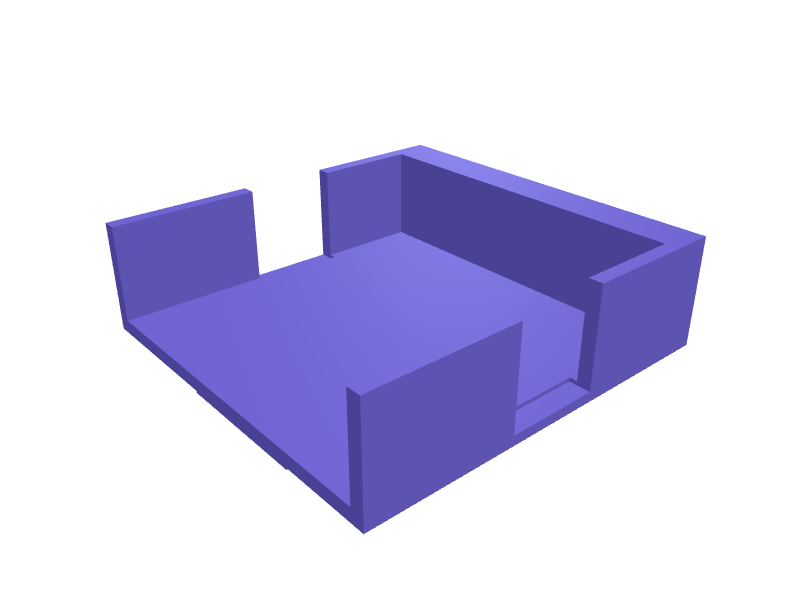
A cradle that fixes a Rode Wireless GO II receiver, which is 44 x 45.3 x 18.5 mm, onto the hot shoe of a Sony A7 IV, Canon EOS R6 or Fujifilm X-T5 without relying on the receiver's spring clip, which loosens with age. The pocket is 44.5 x 46 mm with a 0.4 mm clearance, open at the front so the display is visible, with a 12 mm cutout on the side for the 3.5 mm TRS lead and a second for USB-C. Beneath it a standard 18.7 mm ISO cold-shoe foot with 2 mm flanges slides into the camera's shoe, and it also fits the Wireless GO original and the Micro receiver. Print it foot-up with 1.8 mm walls. Open the ready-made model free, resize it on your phone or computer, then download a print-ready STL, 3MF or G-code sliced for your printer, free.Opening the ready-made model and downloading it as STL or 3MF are free, no card; AI changes use credits, from Maker at $7.99 a month.No printer? We print this part and ship it to your door. See its priceUpdated
2
Adjust
Change its numbers in the viewer for free, or ask the AI in the chat: wall thickness, hole size, the thing it clips onto. AI changes use 2 credits per request (1 for a quick edit, 3 for a redesign), paid with a plan from Maker at $7.99 a month.3Print
Download a watertight STL or 3MF free, with your numbers and hand edits, or G-code sliced for your printer at the same price. After an AI change the download is included in every plan (4 credits without one).
Dimensions of the ready-made model (editable)
| Parameter | Value |
|---|---|
| wall thickness | 1.8 mm |
| width of cutout along Y | 12 mm |
| width of shoe rail (X) | 18.7 mm |
| flange width each side | 2 mm |
| flange thickness | 2 mm |
| total rail height (base + flange step) | 3 mm |
| locking bump diameter-ish | 1.2 mm |
Example prompt
Design a cold shoe cradle for a Rode Wireless GO II receiver with a 44.5 x 46 x 12 mm pocket and 0.4 mm clearance, open front, 12 mm side cutouts for TRS and USB-C cables, a standard 18.7 mm wide cold shoe foot with 2 mm flanges and a 1 mm locking bump, 1.8 mm walls.
Fit notes
A clip designed for one camera body may block the viewfinder on another. Tell SpeakCAD your camera and where the cable should exit, preview the cradle in the browser, refine in the chat and download the STL.
Questions people ask about a Rode Wireless GO II receiver cold shoe cradle
A cradle that fixes a Rode Wireless GO II receiver, which is 44 x 45.3 x 18.5 mm, onto the hot shoe of a Sony A7 IV, Canon EOS R6 or Fujifilm X-T5 without relying on the receiver's spring clip, which loosens with age. The pocket is 44.5 x 46 mm with a 0.4 mm clearance, open at the front so the display is visible, with a 12 mm cutout on the side for the 3.5 mm TRS lead and a second for USB-C. Beneath it a standard 18.7 mm ISO cold-shoe foot with 2 mm flanges slides into the camera's shoe, and it also fits the Wireless GO original and the Micro receiver. Print it foot-up with 1.8 mm walls.
Click Open it free on this page and create a free account (no card): the ready-made model opens in your browser, on your phone or computer, nothing to install. Change its numbers in the viewer for free and download a watertight STL or 3MF free, or G-code sliced for your printer at the same price. An AI change in the chat uses 2 credits per request (3 for a redesign), and the download after it is included in every plan (4 credits without one). Start with Maker: 50 credits a month for $7.99, cancel anytime.
On this page: open the ready-made model free in a SpeakCAD account (no card), change any dimension in the viewer, then download the STL or 3MF free, or G-code sliced for your printer at the same price.
A shared STL is modelled for someone else's measurements. Here you open the ready-made model free, change it to your measurements in the viewer, then download a file sized for the part you actually own, free as STL or 3MF.
Yes. SpeakCAD slices the part on its servers with OrcaSlicer and your printer's official profile (380+ printers, including Bambu Lab, Prusa, Creality and Elegoo), and you download the G-code (a sliced .gcode.3mf for Bambu Lab printers). G-code sliced for your printer costs the same as the STL: included in every plan, free for a part you shaped by hand, 4 credits without a plan for a part with AI work in it. Pick your printer on the printers page to see its profile.
No. SpeakCAD runs in the browser on your phone or computer: the chat, the 3D engine and the live viewer load in the tab. The only file you download is the finished STL, 3MF or sliced G-code.
Print it your way
More adapters & couplers
Raspberry Pi Camera Module 3 GoPro mount adapterReady-made, opens free. An adapter that puts a Raspberry Pi Camera Module 3 on any GoPro-style mount, giving access to hundreds of clamps, suction cups and helmet mounts.Bugaboo Fox stroller cup holder adapter clampReady-made, opens free. A clamp that fixes a cup holder to the handlebar or frame of a Bugaboo Fox, Cameleon or Bee so a coffee and a water bottle ride along without dangling from a…SwitchBot Blind Tilt rod adapter 6 mmReady-made, opens free. An adapter that lets a SwitchBot Blind Tilt drive a 6 mm square tilt rod instead of the 7 mm it shipped for.VESA adapter plate, 75 mm to 100 mmReady-made, opens free. A flat plate that lets a monitor with a 75 x 75 mm VESA pattern hang on an arm or wall mount built for 100 x 100 mm.Rigid shaft coupler, 5 mm to 8 mmReady-made, opens free. A rigid coupling that joins a 5 mm motor shaft to an 8 mm lead screw or output shaft in low-torque projects such as small linear stages or slow turntables.Knog Blinder light to GoPro mount adapterReady-made, opens free. Knog Blinder and Plus lights strap around a handlebar with an integrated silicone band, which means they cannot use the GoPro mount under most out-front comp…