Use case
Custom cookie cutters, stamps and embossers
Cookie cutters are the classic quick print, and the classic thing nobody wants to model. Describe the outline (or upload a drawing), pick the size, and SpeakCAD generates a cutter with a 0.8 mm blade, a pressing flange and optional embossed details.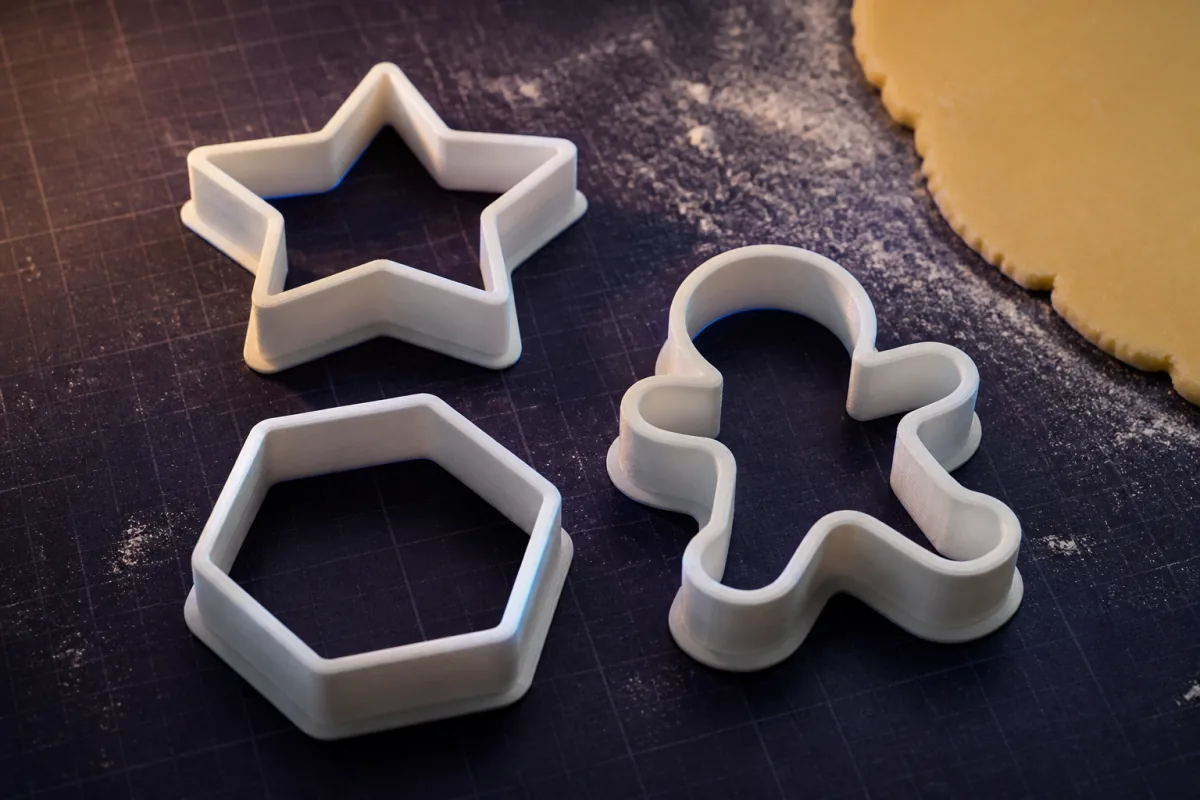
Prompts that work
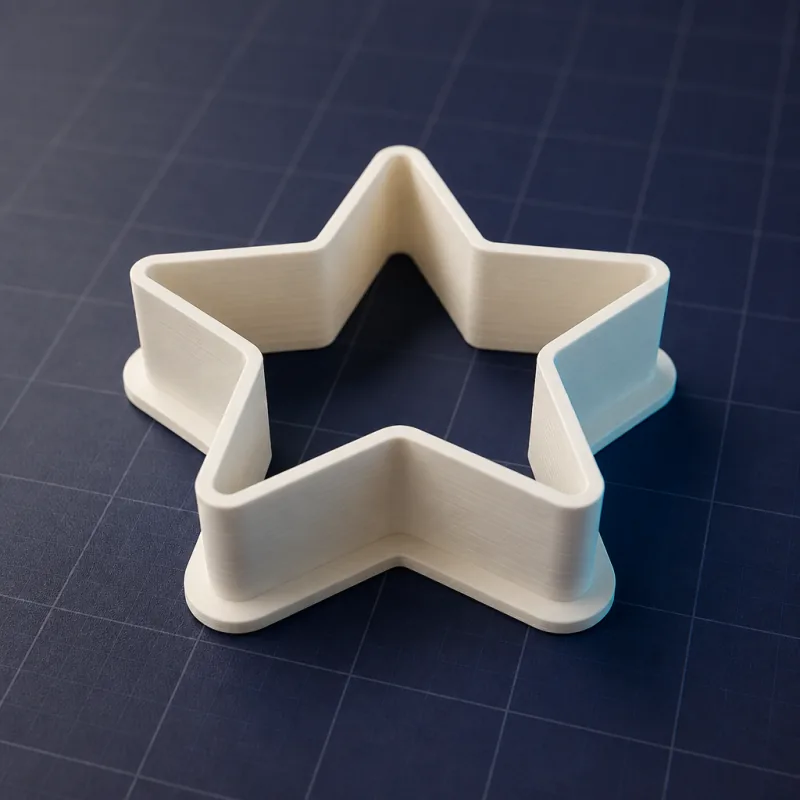
Copy one into the box above and change the numbers to yours. The first render usually appears within a minute or two.“A five-point star cookie cutter, 80 mm across, 15 mm tall, 0.8 mm blade, 4 mm wide flange 2 mm thick.”
“A dinosaur outline cookie cutter from the attached sketch, 100 mm long, with an inner stamp plate showing the eye and spine lines.”
“A round clay stamp 40 mm diameter with the letters ‘MK’ raised 1.5 mm, mirrored so the impression reads correctly.”
Anatomy of a good cutter
- Blade: 0.8 mm wide (two extrusion widths) and 12 to 15 mm tall cuts cleanly without bending.
- Flange: a 4 to 5 mm wide rim 2 mm thick at the top gives you something to press on.
- Depth stop: an optional inner ledge keeps the cut depth consistent.
- Draft: a slight taper on the outside face helps the dough release.
Stamps and embossers
Raised text and lines 1 to 1.5 mm high work well for fondant and polymer clay. Text is mirrored automatically when you say it is a stamp so the impression reads correctly.
Food safety notes
Print in PLA or PETG with a clean nozzle, avoid dyes of unknown origin, wash by hand and consider the cutter a short-lived tool since layer lines trap moisture. Food-safe epoxy coating is an option for keepers.
Examples from the gallery
Questions
Yes. Attach a clean black-on-white outline (PNG or JPG). The AI approximates the outline with a polygon and asks if a simplification is acceptable.
Anything that fits your bed. Very large cutters (over 150 mm) benefit from a taller flange to stay rigid.
Related use cases
Planters & decorGenerate planters, pots, vases and decorative objects in the size and style you describe: taper, facets, drainage, saucers. Print-ready STL, 3MF or sliced G-code.OrganizersDescribe your drawer or shelf and what goes in it. SpeakCAD generates dividers, trays, bit holders and bins sized to the millimetre. STL, 3MF or sliced G-code export.Replacement partsBroken knob, clip, hinge or foot? Describe it with a few measurements and SpeakCAD generates a printable STL replacement in minutes. From $7.99 a month.