How much does it cost to get something 3D printed? Real prices in 2026
What a 3D-printed part really costs: setup, grams, printing hours and postage, with real prices from $9.99 + shipping, and why ten copies cost far less each.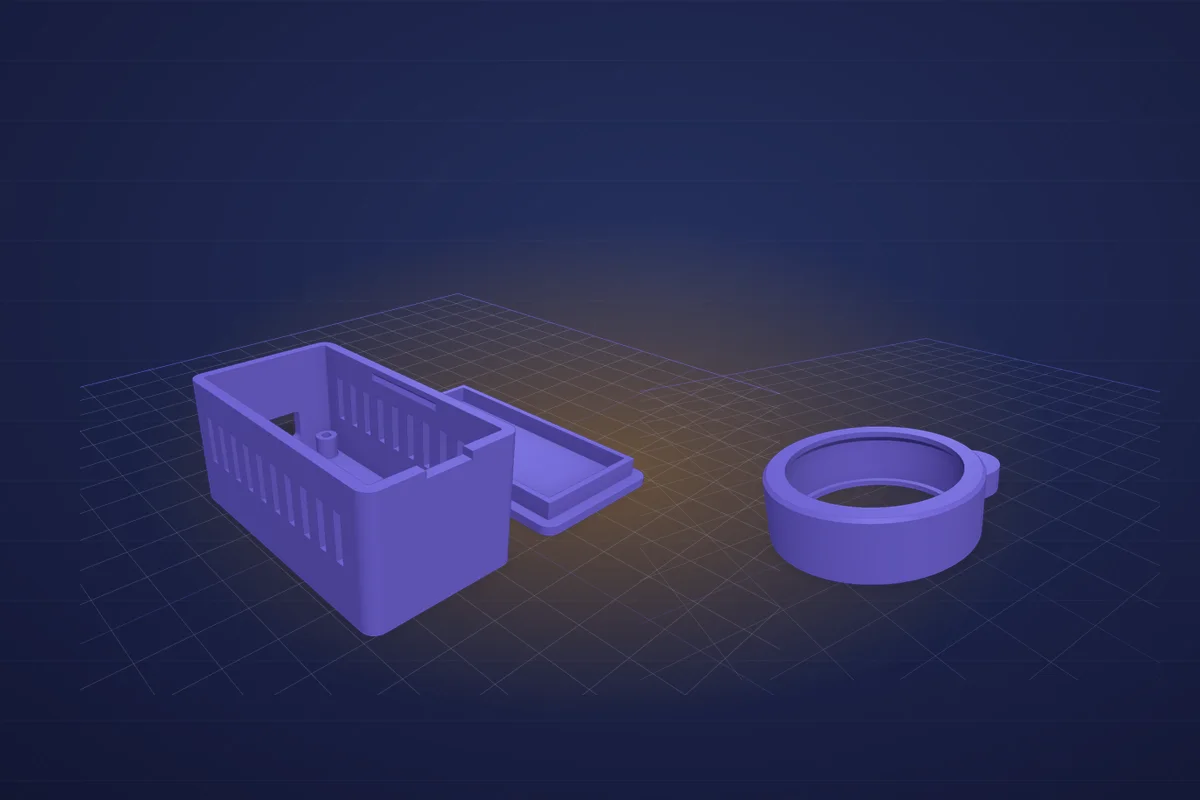
Ask "how much to 3D print this?" and you get answers from "a few cents of plastic" to "forty dollars". Both are right: the plastic in a small part costs cents, and a printed part delivered to your door costs a lot more, because most of the price is not the plastic. Here is where the money goes, with real prices from SpeakCAD's print service.
The five things a print shop charges for
- Setup. Someone opens your file, checks it, slices it, puts the plate on the printer and takes the part off. It costs the same for one small part as for a big one, which is why every service has a minimum order.
- Plastic. Charged by the gram, supports included. PLA and PETG are cheap materials; a small holder uses a few grams.
- Machine time. Charged by the hour. A part that takes 6 hours ties up the printer for 6 hours, whatever it weighs.
- Postage. Tracked delivery of a small parcel, the biggest single line for a small part.
- Taxes and card fees.
A quote from the bounding box ("a 6 × 8 × 3 cm box costs X") gets this wrong, because a hollow enclosure and a solid block of the same size use very different amounts of plastic and time. SpeakCAD prices from a real slice of the part instead: the grams and hours a print farm would bill.
Real prices
| Part, PLA | United States | France and the euro area |
|---|---|---|
| AirTag keychain holder, 1 piece | $9.99 + $8.00 shipping | €9.99 + €9.00 shipping |
| ESP32 enclosure with snap lid, 1 piece | $9.99 + $9.00 shipping | €10.99 + €9.00 shipping |
| Phone stand with cable slot, 1 piece | $12.99 + $9.00 shipping | €12.99 + €9.00 shipping |
| Drawer organizer tray, 1 piece | $18.99 + $10.00 shipping | €16.99 + €9.00 shipping |
| AirTag keychain holder, 10 pieces | $14.99 ($1.50 each, 85% less) + $9.00 shipping | €13.99 (€1.40 each, 86% less) + €9.00 shipping |
| AirTag keychain holder, 50 pieces | $41.99 ($0.84 each, 92% less) + $15.00 shipping | €34.99 (€0.70 each, 93% less) + €10.00 shipping |
| ESP32 enclosure with snap lid, 10 pieces | $38.99 ($3.90 each, 61% less) + $15.00 shipping | €32.99 (€3.30 each, 70% less) + €10.00 shipping |
Prices include tracked delivery and taxes. Each one is computed by the same formula the order form uses, on a typical slice of the part.
Why ten copies cost so much less each
Look at the AirTag holder: one piece is $17.99 with shipping, ten are $23.99. The setup and the postage count once per order, so the eleventh dollar buys almost only plastic and printing time. For anything you need several of (spacers, clips, wall plugs, organiser bins, a run of enclosures for a small project), order them together. More in batch printing.
How to make a part cheaper to print
- Make it smaller or thinner where it does not matter. Plastic and time scale with volume. A 3 mm wall is rarely needed where 2 mm will do.
- Avoid overhangs that need supports. Supports are plastic and time you pay for and throw away. A 45° chamfer under a ledge instead of a flat overhang often removes them.
- Put a flat face on the bed. A part that lies flat prints faster and stronger.
- Combine parts in one order. Two different parts can't share an order yet, but ten of the same part can.
What printing it yourself costs, for comparison
A 1 kg spool of PLA typically costs around 15 to 25 dollars, so the plastic in a 10 g part is about 20 cents, plus a little electricity. That is the real case for owning a printer: once you have one, a part costs almost nothing. The price of a print service is the price of not having one: setup, a machine, and the post.
Made to order, so it can't be returned; if we can't deliver it, or it arrives broken, the full price comes back as SpeakCAD credits.
Questions
With SpeakCAD, a small part like an AirTag holder is $9.99 plus $8.00 tracked shipping in the United States, and €9.99 plus €9.00 in the euro area, taxes and import duties included. Most of it is the postage and the setup, not the plastic.
Because the setup and the postage cost the same for one part as for ten. The plastic itself is cheap; a batch spreads the fixed costs over every piece.