Gehäuse für winzige Platinen: Seeed XIAO, Adafruit QT Py, ESP32 SuperMini und Feather, 3D-gedruckt
Platinen unter 25 mm Breite brauchen 1,5 mm Wände, Antennen-Freihaltezonen und Platz für einen USB-C-Stecker. Maße für XIAO, QT Py, SuperMini und Feather, plus Prompts für Wearables.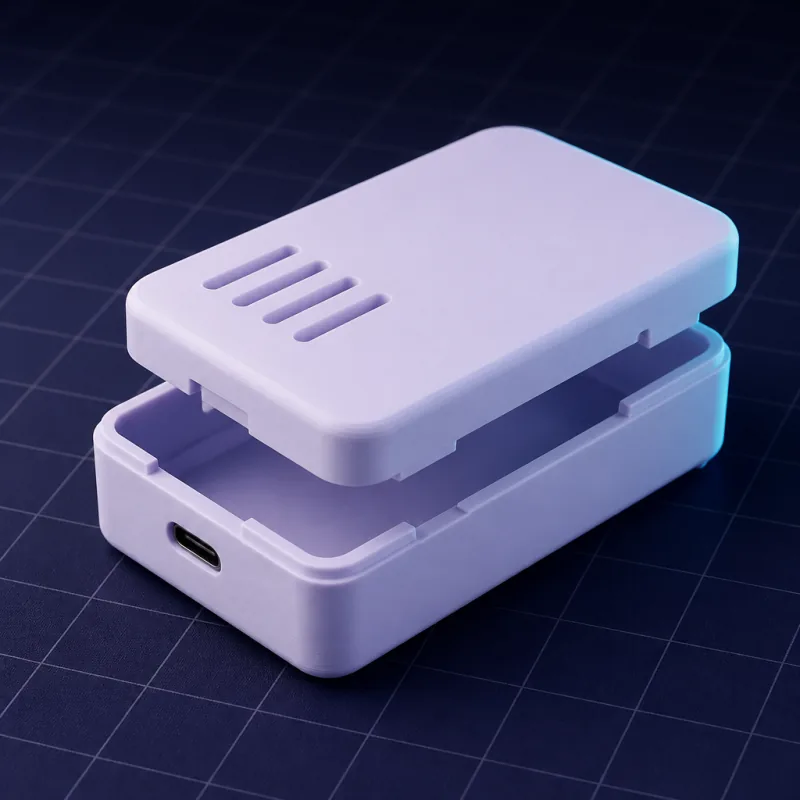
Die Platinen
| Platine | Umriss | USB | Löcher | Hinweise |
|---|---|---|---|---|
| Seeed XIAO (alle Varianten) | 21 x 17,8 mm | USB-C | Keine | ESP32-C3/S3 haben einen externen Antennenanschluss; nRF52840 hat eine Chip-Antenne |
| Adafruit QT Py | 22 x 18 mm | USB-C | Keine | STEMMA-QT-Anschluss an der fernen Kante |
| ESP32-C3 / S3 SuperMini | 22,5 x 18 mm | USB-C | Keine | Keramikantenne an einer Ecke |
| Adafruit Feather | 51 x 23 mm | Micro-B oder USB-C | 4 x 2,5 mm in einem 45,7 x 17,8 mm Muster | JST-Batterieanschluss an der kurzen Kante |
| Feather + FeatherWing | 51 x 23 mm, Stapel etwa 20 mm hoch | Gleich |
XIAO, QT Py und SuperMini liegen in der Größe so nah beieinander, dass ein Gehäusedesign allen dreien dient; nur die Antennen-Freihaltezone und der Anschluss an der fernen Kante ändern sich.
Regeln für kleine Gehäuse
- 1,5 mm Wände. Bei dieser Größe genug; 2-mm-Wände lassen aus einer 21-mm-Platine eine 30-mm-Box werden.
- 0,3 mm Spiel. Kleine Platinen brauchen nicht die 0,5 bis 1 mm eines Pi.
- USB-C-Stecker-Vertiefung. Die Ummantelung des Steckers ist etwa 12 x 6,5 mm. Ein 9 x 3,5 mm Loch reicht für den Anschluss; füg außen eine 12,5 x 7 mm Vertiefung hinzu, damit der Stecker sitzt.
- Antenne. Lass 3 mm Luft an der Antennenecke. Die KI fügt die Freihaltezone hinzu, wenn du sagst, welche Platine es ist.
- Batterie. Viele dieser Platinen laden einen LiPo. Eine 402030-Zelle ist 30 x 20 x 4 mm; verlang eine Zellentasche unter der Platine, und das Gehäuse wird zum Wearable.
Der Prompt (XIAO-Wearable)
Der Prompt (Feather-Stapel)
Schlüsselanhänger und Clips
„Füg an einer Ecke eine 5-mm-Schlüsselringöse hinzu“ oder „einen 20-mm-Federclip auf der Rückseite“ macht aus jedem davon etwas Tragbares. Das XIAO-ESP32-C3-Schlüsselanhänger-Gehäuse, das ESP32-C3-SuperMini-Gehäuse mit Sensorlüftung und das Feather-Gehäuse mit FeatherWing-Stapel sind vorausgefüllt in der Bibliothek.
Prompts to start from
Open one in the builder, change the numbers to yours, and the model renders in seconds. Keep adjusting in the chat before you print.A wearable case for a Seeed XIAO nRF52840 Sense, board 21 x 17.8 mm, USB-C on one short edge, with a 402030 LiPo (30 x 20 x 4 mm) in a pocket under the board. 1.5 mm walls, 0.3 mm clearance, 12 mm internal height total. A 9 x 3.5 mm USB-C cutout with a 12.5 x 7 mm outside recess, a 3 mm hole in the lid above the LED, two 12 x 2 mm slots on the sides for a 12 mm watch strap, friction lid. Total size about 36 x 24 x 15 mm.
A case for an Adafruit Feather with one FeatherWing stacked on top, board 51 x 23 mm with four 2.5 mm holes on a 45.7 x 17.8 mm pattern, stack height 20 mm. 3 mm standoffs with 2.2 mm pins, 1.6 mm walls, 0.5 mm clearance, 24 mm internal height. USB-C cutout and a 10 x 6 mm JST battery slot on the short edge, the lid open above the FeatherWing, snap-fit.
A keychain case for an Adafruit QT Py, board 22 x 18 mm, USB-C on one short edge and a STEMMA QT connector on the other: 1.5 mm walls, 0.3 mm clearance, 7 mm internal height, USB-C cutout with an outside plug recess, a 6 x 3 mm slot for the STEMMA cable, a 5 mm keyring loop, snap lid.
Questions
Fast. Sie sind alle etwa 22 x 18 mm mit USB-C an einer kurzen Kante. Der Anschluss an der fernen Kante (STEMMA QT beim QT Py) und die Antennenecke unterscheiden sich, nenn also die Platine, und Freihaltezone und Schlitz werden korrekt platziert.
Die Ummantelung des Steckers ist breiter als der Anschluss. Verlang eine 12,5 x 7 mm Vertiefung außen um das USB-Loch, damit der Steckerkörper die Wand nicht berührt.
Ja. Gib die Zellengröße an (402030 ist 30 x 20 x 4 mm, 502030 ist 30 x 20 x 5 mm) und verlang eine Tasche unter oder neben der Platine. Die KI lässt 1 mm Schaumstoffplatz, damit die Zelle nicht eingeklemmt wird.